Repair damaged or disconnected ductwork in your Denver metro property. Describe the affected rooms and any visible damage so we can discuss the work and access needed.
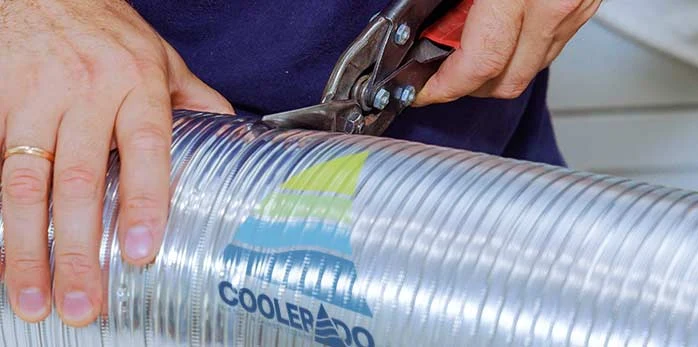
Trimming metal ductworkA close-up photograph shows a hand steadying the duct while snips are positioned against the metal.
When to ask about duct repair
A room that never feels like the rest of the house, a visible gap in accessible ductwork, or a new rattle can be worth discussing. Those symptoms do not identify the cause by themselves. Filters, equipment, controls, and the duct layout can all influence how air moves through a home.
We offer different cleaning levels because every system starts in a different condition. The work should match what is actually there.
James, Owner of Coolerado Air Duct
Give the problem some context
Tell us where the issue occurs, whether it changes between heating and cooling, and if it started after remodeling or other work. Photos of accessible duct damage can help explain the concern. You do not need to enter a difficult attic or crawl space to gather information.
Repair or replace a section?
A localized problem may call for a targeted repair. A deteriorated section or a larger layout problem may call for replacement or new ductwork. Ask what is being repaired, why that approach fits, and how access to the affected area will be handled before agreeing to the scope.
Describe the problem before choosing the repair
A cold bedroom and a rattling duct do not necessarily need the same work. Start by noting where the problem occurs and whether it changes when doors are open, the system changes modes, or the weather shifts. Those details help separate a problem in one branch from a concern affecting the whole system.
Swipe the table sideways to read all columns.
Useful observations for a duct repair conversation
Observation
Information to share
Question for the estimate
Visible separation at a joint
Its location and whether it is easily accessible
What connection and support work is included?
A crushed or torn section
Approximate length and surrounding access
Can a section be replaced without changing the full run?
New rattling or movement
When the sound starts and which room it is near
What is loose, and how will it be secured?
Persistent room-to-room differences
Which rooms are affected in heating and cooling
Is the issue a defect, a layout problem, or something outside the ducts?
Compare a targeted repair with a larger change
A repair proposal should connect the recommended work to an observed problem. Ask to see the affected area or a photo when access is difficult. If the proposal includes replacing a long run, ask why repairing the damaged part would not be sufficient.
Localized repair: identify the joint, connection, or support that needs attention.
Section replacement: define the start and end of the replacement and the connection to retained ductwork.
Layout change: explain which rooms are affected and what planning is needed before rerouting.
Related work: list insulation, equipment adjustments, or finish repairs separately so responsibilities are clear.
If new ductwork is the better fit, use our duct installation guide to prepare for that discussion. Replacing equipment also deserves a separate conversation; a new unit does not establish that every existing duct needs replacement.
Five questions to ask about the repair
What defect was found, and where is it?
Which sections will remain and which will be repaired or replaced?
Will the work require opening a wall, ceiling, or other finished surface?
Who handles access, insulation, cleanup, and any finish restoration?
What will be checked after the work, and what findings will I receive?
Keep the written scope and any photos with your home maintenance records. If a room still feels different after the agreed repair, those records make it easier to discuss what has changed and what remains unresolved.
Access affects both the plan and the estimate
A visible duct in an unfinished basement is a different job from a duct concealed behind a finished ceiling. Share what you know about access before scheduling. For a remodel, tell us which surfaces are already open and when the next contractor is scheduled to close them.
Do not pull on a loose duct or climb into a confined space to collect photos. A description from a safe location is enough to start. For equipment symptoms such as a system that will not start, see HVAC repair. For debris without visible damage, compare the scope on our air duct cleaning page.
Your questions, answered.
Will cleaning fix a disconnected duct?+
No. Debris removal cannot reconnect or repair ductwork. Describe visible damage when you contact us so the conversation starts with the appropriate service.
Should I replace all my ducts?+
Not automatically. The condition, layout, and extent of the problem should inform the decision. Start with a discussion of the affected areas and the repair options.
Fair pricing starts with a clear scope. You should know what is included and what the job will cost before you agree to the work.
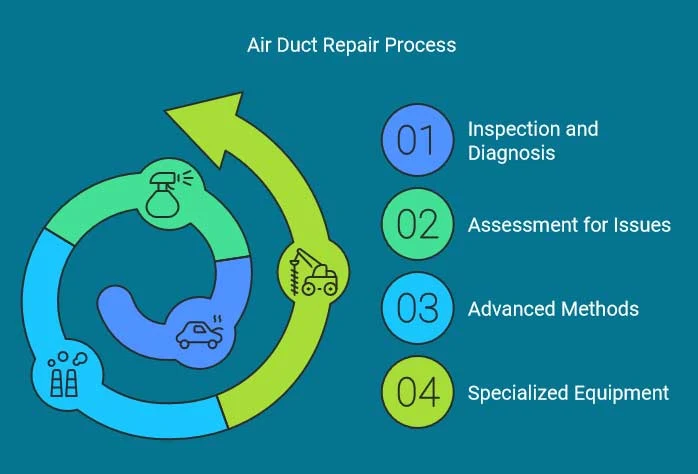
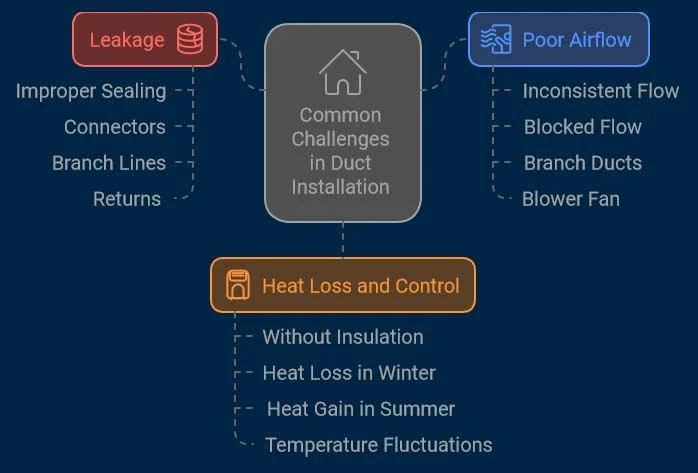
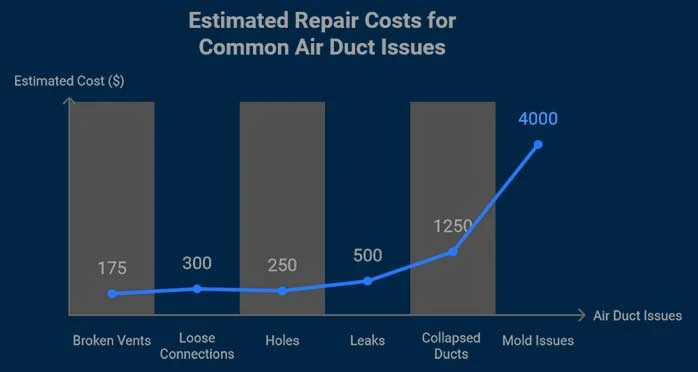
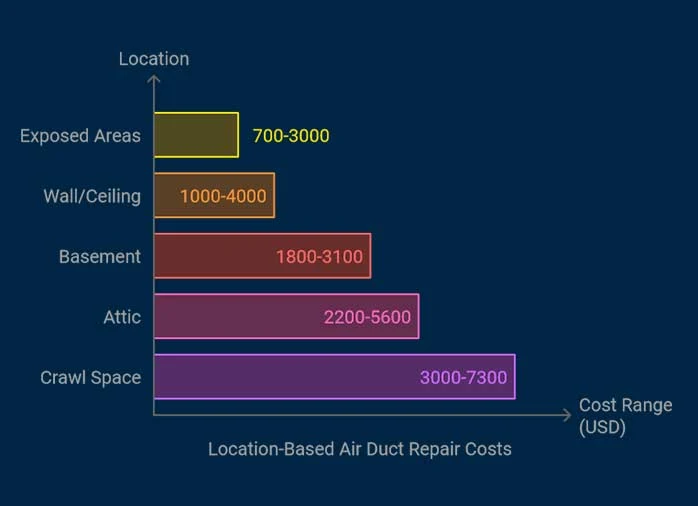
Metal duct in roof framingA branded duct section projects through timber framing in an unfinished roof space.Duct repair planning diagramFour labeled areas surround an air duct repair heading in an illustrated planning graphic.Duct repair processCircular arrows accompany inspection, assessment, methods, and equipment labels.Ductwork problem categoriesThree labeled branches organize examples of issues to discuss when assessing ductwork.Duct repair cost chart — historical reference, not a current quote.A line chart displays older estimated costs for vents, connections, holes, leaks, collapsed ducts, and mold-related work. Confirm current pricing directly with Coolerado.Repair costs by access location — historical reference, not a current quote.Colored bars show older estimated ranges for exposed areas, walls, basements, attics, and crawl spaces. Confirm current pricing directly with Coolerado.