
Dryer vent service in a multiunit building starts with identifying the unit, the route, and the people who control access. A resident may know the appliance's symptoms while a manager holds the building plans and exterior-access arrangements. Combining those details helps define the visit before a contractor arrives at a locked roof door or an unfamiliar shared area.
Confirm responsibility without guessing
Ask the owner, association, or manager which maintenance and alteration responsibilities apply to your unit. This can depend on governing documents and the particular building. A vent's location does not by itself establish who pays for service. Resolve authorization through the building's normal process; a service technician should not have to decide a lease or association dispute.
If the dryer is taking longer than usual, use the slow-drying symptom guide to describe what you observed. That gives the maintenance contact something more useful than a request based only on the age of the appliance.
Identify the contacts and access
| Information | Who may know it | Why to obtain it |
|---|---|---|
| Unit and appliance location | Resident | Locates the start of the inquiry |
| Route and outlet | Manager or maintenance records | Helps define the system to assess |
| Restricted access | Building manager | Arranges keys, escorts, or exterior entry |
| Approval and payment | Authorized owner or manager | Prevents uncertainty about added work |
Do not assume that all similar-looking units have identical routes. Alterations, floor position, and building layout may affect the work. If the route is unknown, ask how it will be identified rather than assigning the nearest exterior opening to your dryer.
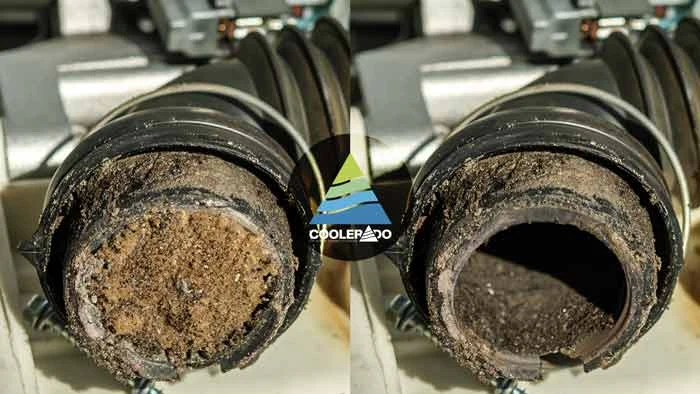
We offer different cleaning levels because every system starts in a different condition. The work should match what is actually there.
Plan one unit or several deliberately
For a single unit, confirm whether the visit requires access outside that residence. For a coordinated building project, list the participating units and a contact for each. Ask whether the proposed work is individual-unit service or includes other building components. A group schedule should not imply that every part of the building has been assessed.
The roof and wall outlet guide can help explain why an exterior-access plan belongs in the estimate. The cost factors guide distinguishes scope from a headline price.
Arrange the visit in order
- Report the concern to the appropriate property contact.
- Confirm authorization, payment, and any building requirements.
- Identify the unit, dryer location, and known route.
- Coordinate resident entry and any shared-area access.
- Review cleaning and repair scopes separately.
- Save the completion information with the correct unit record.
Prepare residents for the actual scope
Tell residents what access is requested and who will contact them if timing changes. Do not promise a fixed drying-time improvement or describe the appointment as a complete building inspection unless that is the agreed service. Ask about pets, stacked appliances, storage, and other practical obstacles before the visit.
- Use complete unit numbers on requests and records.
- Identify a backup contact for access problems.
- Keep individual symptoms tied to the correct unit.
- Document sections that could not be reached.
- Separate future recommendations from work already completed.
When a route change is proposed
An alteration may affect exterior or shared building areas and require additional coordination. Review the dryer vent installation guide before approving changes. Ask which parties must agree, who establishes project requirements, and who restores any disturbed finishes.
Fair pricing starts with a clear scope. You should know what is included and what the job will cost before you agree to the work.
Request service with the building details
Coolerado can discuss dryer vent cleaning and a free estimate. Include the address, unit number, property contact, symptom, and known restrictions in the appointment request. A complete request helps the team distinguish an ordinary unit visit from a project requiring broader building coordination.